
Why Product Descriptions Matter in B2B
B2B buyers research before talking to sales. Your product descriptions are often their first impression.
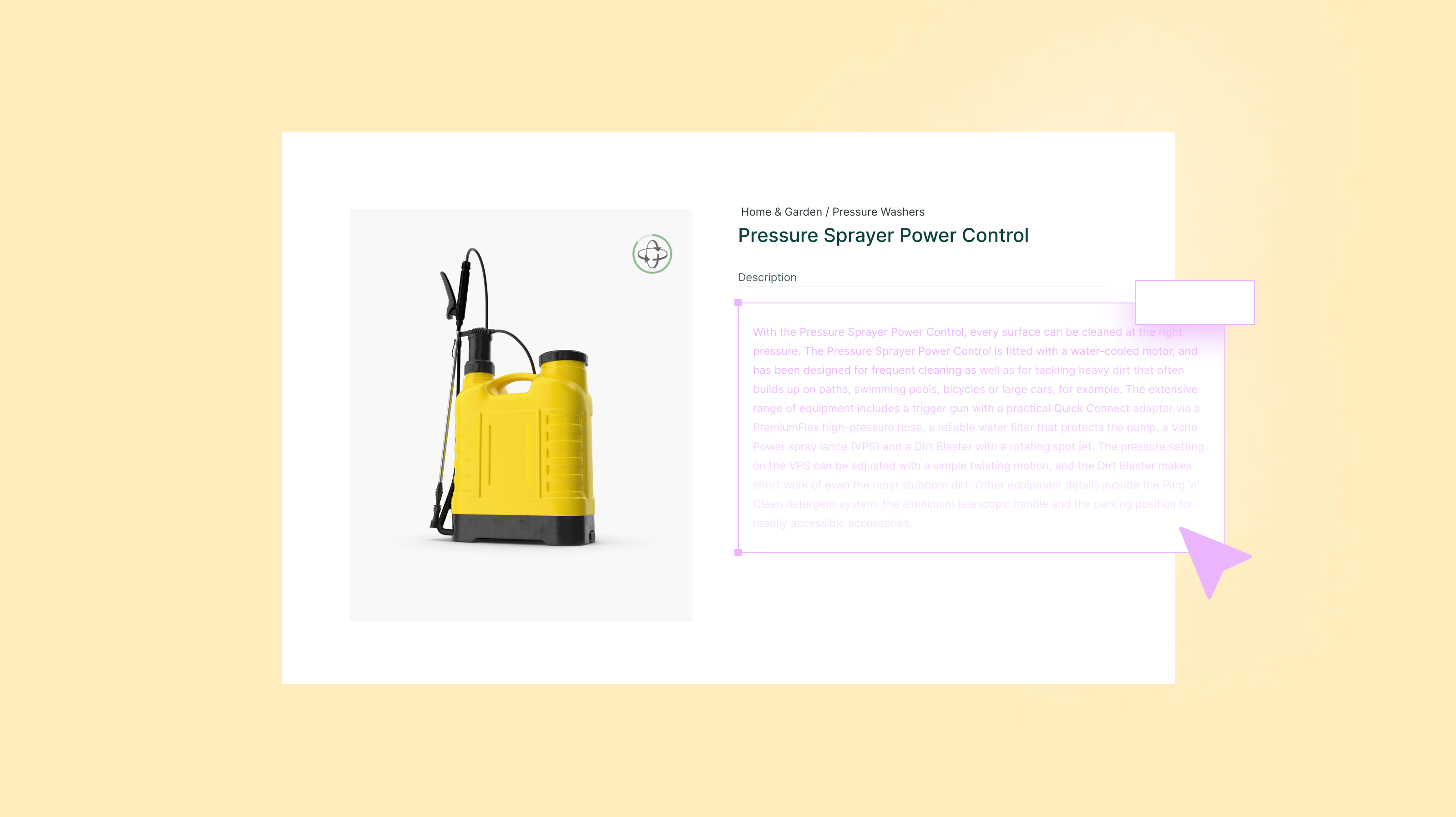
But most descriptions are dull, technical, and fail to persuade. They list specifications without showing how the product solves a problem.
According to Forrester, nearly 90% of B2B buyers faced stalled purchasing processes in 2023 due to budget constraints and complex decision-making. That means a well-written product description does more than inform. It convinces and moves buyers toward a decision.
Let’s explore how to turn a standard description into a powerful sales tool.
Focus on Benefits Instead of Features
Why it matters
B2B buyers do not just want details. They need to understand how a product makes their work easier, faster, or more cost-effective.
How to do it
Use this formula: FEATURE → WHAT IT MEANS → BENEFIT
This approach translates technical information into real business value.
Example
Instead of: "Made with 304 stainless steel."
Try: "Corrosion-resistant for long-term durability and lower maintenance costs."
The second version tells buyers why it matters, making it more compelling.
Use Storytelling to Make Your Product Memorable
Why it matters
People remember stories better than lists of facts. In B2B, a good story builds credibility and reduces perceived risk.
How to do it
For key products, add a short success story or use case. Show how a company achieved results with your solution.
Example
Instead of: "Increases operational efficiency."
Try: "A logistics company reduced processing time by 40% with this solution, allowing them to scale without additional costs."
A real-world example makes the product feel like a safe and smart investment.
Use Sensory Language to Create a Stronger Impression
Why it matters
Technical descriptions feel distant. Sensory words help buyers visualize using the product, making it more engaging.
How to do it
Describe how the product looks, feels, or performs during use.
Example
Instead of: "Non-slip material."
Try: "Ultra-smooth surface for a firm and secure grip, even in high-pressure environments."
This makes the product feel more tangible and real.
Small Changes, Big Impact
Most B2B product descriptions do not persuade buyers. They provide facts but miss the chance to influence decisions. The good news is that a few small changes can make a big difference.
Start with one key product. Improve its description using these techniques. Then track engagement, clicks, and conversions. Compare the results to the previous version.
Chances are, you will see a noticeable improvement.
Ready to transform your product descriptions and drive sales? Make these simple changes today. If you're managing product data across multiple channels, a Product Information Management (PIM) solution like Sales Layer can help you scale those improvements with less manual effort.